

Yes. Dry cleaning can kill clothes-moth eggs, larvae and adults on suitable garments. It does not protect cleaned clothes from reinfestation, and it does not treat a source elsewhere in your home. Tell the cleaner what you have found before delivering anything, and arrange suitable care for each item alongside an investigation of the affected storage area.
Finding a hole in a wool jumper often prompts an urgent trip to the dry cleaner. That can be a sensible part of the response, but the next decision matters just as much: where will the garment go when it comes back? This guide explains how to join those two parts of the job without sending every possession for unnecessary cleaning.
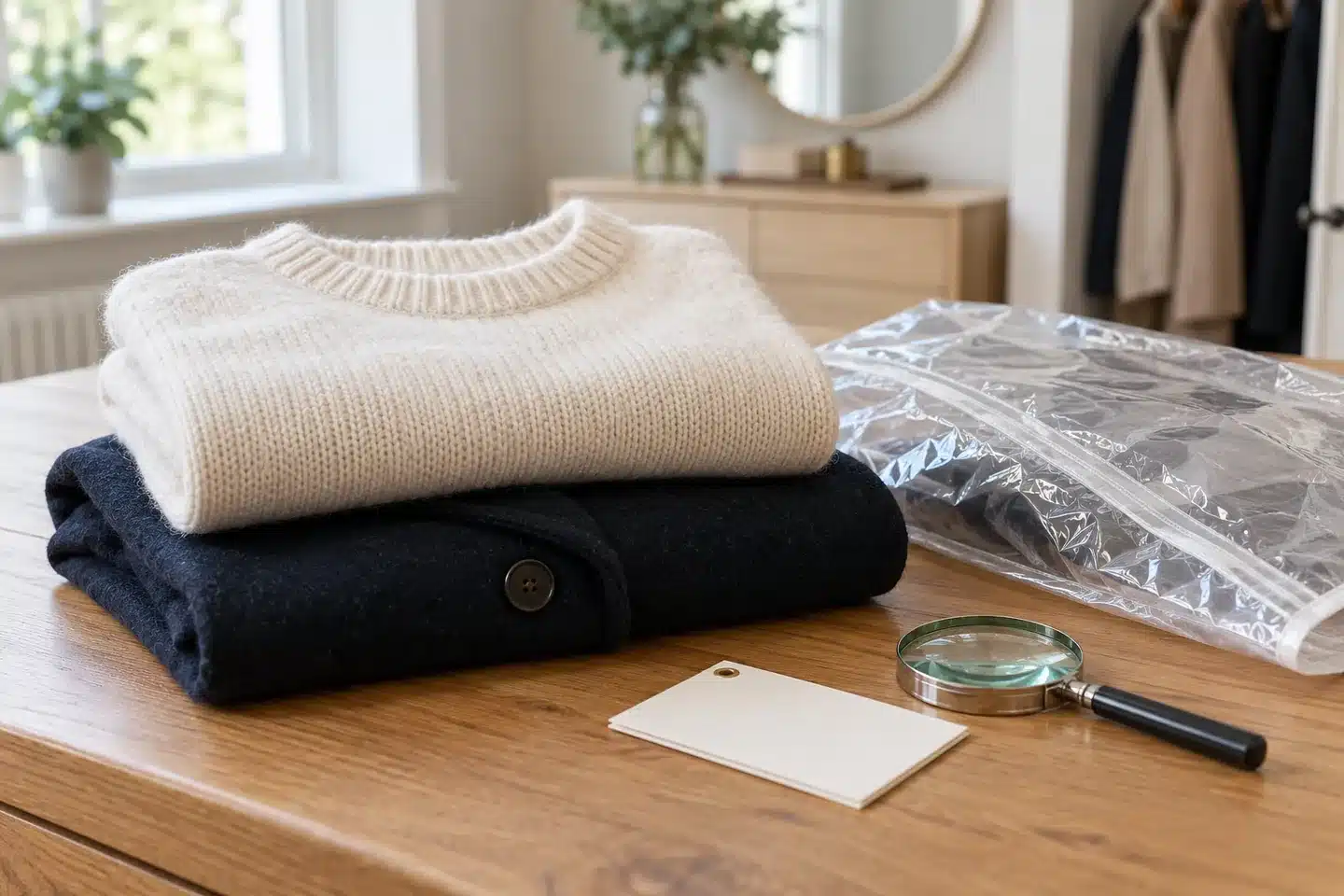
What does dry cleaning actually deal with?
The University of Maryland Extension’s clothes-moth guidance, updated on 17 October 2024, states that dry cleaning kills all life stages but provides no protection against reinfestation. This is guidance about treating the item: it is not a promise about every shop’s service or an entire household. Confirm the proposed process with the cleaner, especially for complex garments and delicate pieces.
The damaging stage is the larva, which feeds on susceptible material. The small adult moth is a warning to investigate, rather than the stage chewing holes. Our carpet moth life-cycle guide explains why a response needs to account for more than the flying moths you can see.
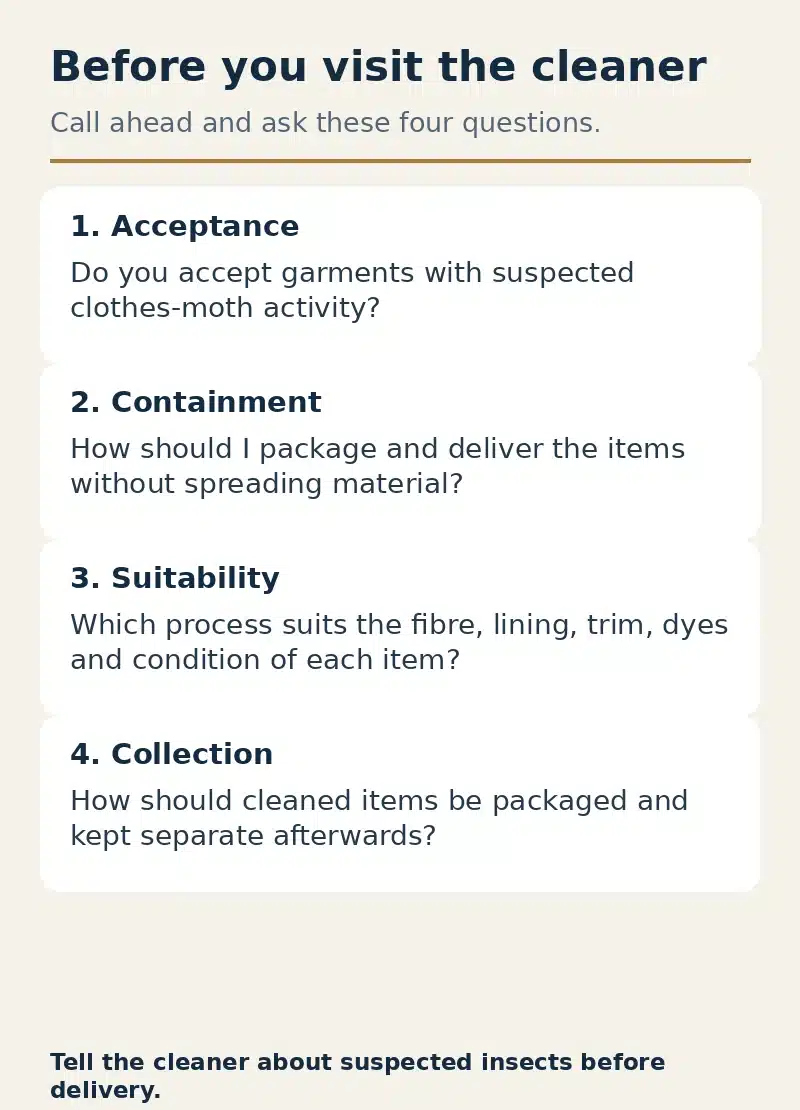
Think of three separate jobs
- Clean the garment: agree an appropriate process for the item and its construction.
- Address the source at home: establish which textiles and areas are affected, rather than assuming the wardrobe is the only place involved.
- Protect the return: put cleaned items into a prepared storage area or appropriate clean, sealed storage while the source is being resolved.
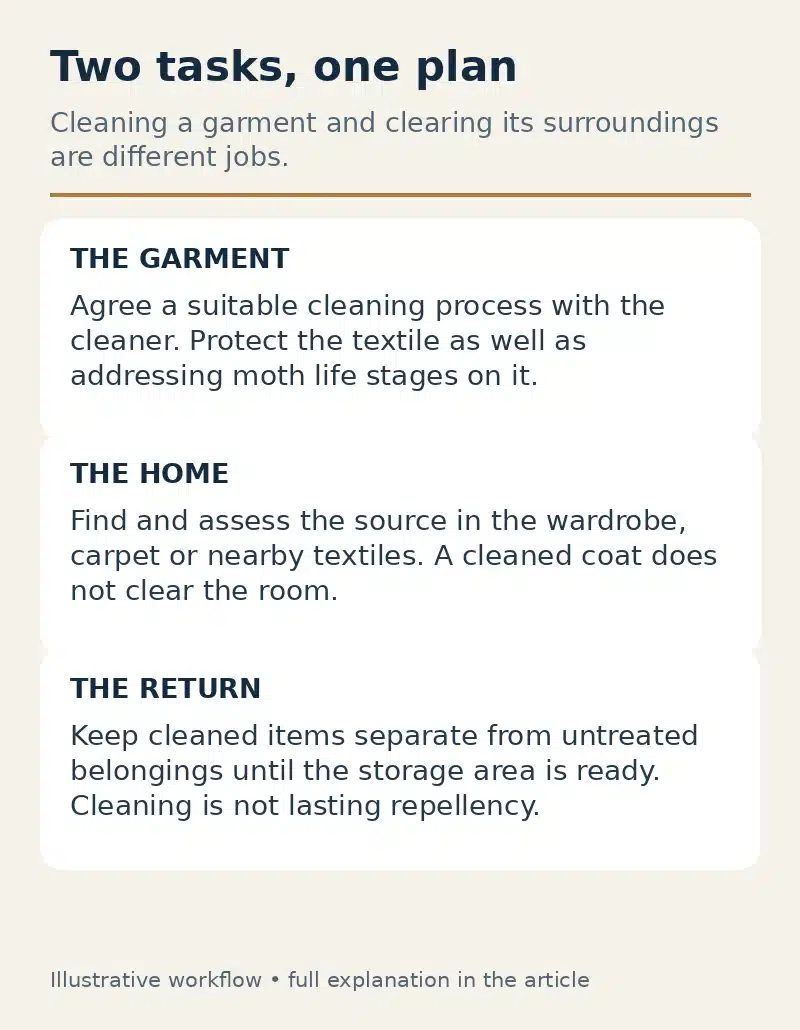
Call the dry cleaner before packing a bag
Do not arrive with loose, suspect clothing and expect every cleaner to accept it. Explain that you have found suspected clothes-moth activity, describe the items and ask what the business can accept. This gives the cleaner a chance to set a handling arrangement and advise on suitability.
- Will you accept these items? Say whether you have seen larvae, webbing, cases or holes, and whether anything is particularly fragile or valuable.
- How should I contain and deliver them? Follow the cleaner’s instructions. Keep suspect items separate from unaffected clothing and avoid shaking them out around the house.
- Is the proposed cleaning suitable for the whole item? Mention linings, interlinings, trims, leather, beads and previous repairs. A wool label alone does not describe a coat’s full construction.
- What should I expect at collection? Ask which items were cleaned, whether any were declined or needed another approach, and how to handle and store them afterwards.
Keep a short item list and photographs of existing damage. If a bag contains several pieces, identify them individually so that an untreated or declined item is not mistaken for a cleaned one. Ask about any charge before agreeing to the work; moth-related garment care is a separate service from treatment of the property.
Which clothes need attention?
Start with the affected items and the vulnerable textiles close to them. Wool, cashmere and other animal-derived materials deserve particular attention. A mixed wardrobe needs an item-by-item decision, not a rule that everything must be dry-cleaned or that everything can go through the same wash.
The University of California’s clothes-moth guidance highlights susceptible animal fibres and the importance of cleaning, vacuuming and protected storage. Blends and soiled fabrics can complicate a quick judgement based only on the main fibre label. Read the garment’s care instructions and tell the cleaner what you found.
Check the pest before choosing a cleaning plan
Holes alone do not identify clothes moths. Carpet beetle larvae can also damage textiles, while moths associated with dry food need a different source investigation. If you are unsure, keep a clear photograph or contained sample for identification rather than treating a flying insect as proof that the wardrobe is infested.
Use our guide to checking for moths for the detailed inspection. For this cleaning decision, record the item, where it was stored, what you found and the agreed next step: cleaner, another care-label-compatible route, or assessment before handling. That record helps keep the process manageable.
Why moths can return after the clothes come back
A professionally cleaned jumper may be returned to a room that still contains an affected rug, another garment or debris in an undisturbed edge. Alternatively, an item awaiting cleaning may be mixed back into the cleaned group. Garment cleaning and room treatment have different scopes, so continued activity needs investigation rather than an immediate assumption that the cleaner failed.
Our guide to what causes carpet moth infestations covers the wider sources. Here, the practical priority is to avoid moving cleaned clothes straight back into unresolved conditions. A fragrance in the wardrobe is not a substitute for dealing with the source.
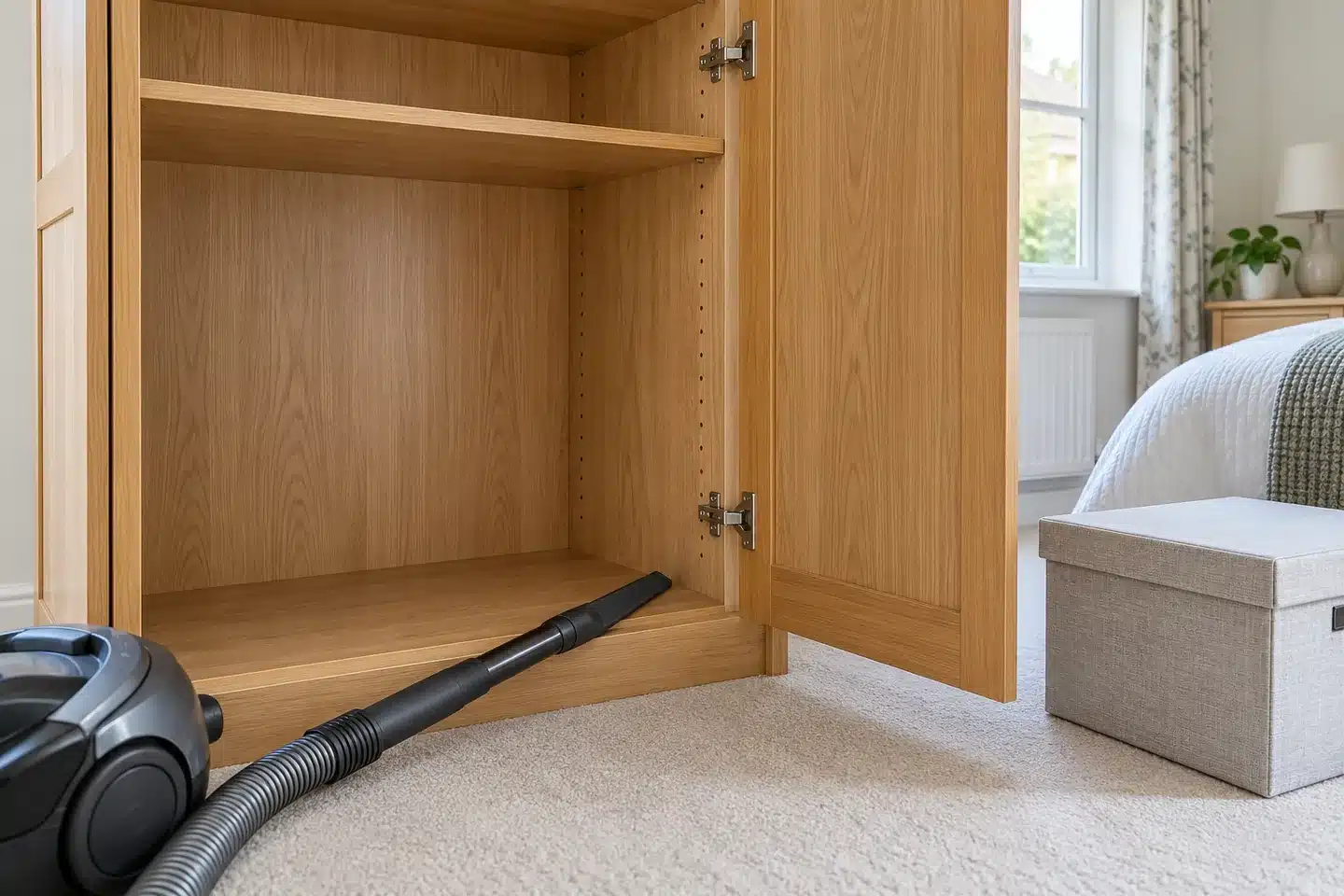
Prepare the storage area before collection
Remove the contents methodically and examine accessible shelves, joints, the base and adjacent textile edges. Vacuum accessible cracks and debris carefully, then empty the vacuum or dispose of its bag promptly outside, following the appliance instructions. English Heritage’s clothes-moth guidance also emphasises checking garments, cleaning before storage and attending to undisturbed areas.
Cleaning a wardrobe does not establish that a fitted carpet or hidden area is clear. If there is evidence beyond the clothing, arrange an assessment before returning the full contents. Avoid applying a household insecticide to garments or delicate furnishings unless the product label specifically allows that use and its instructions can be followed.
A practical return-home checklist
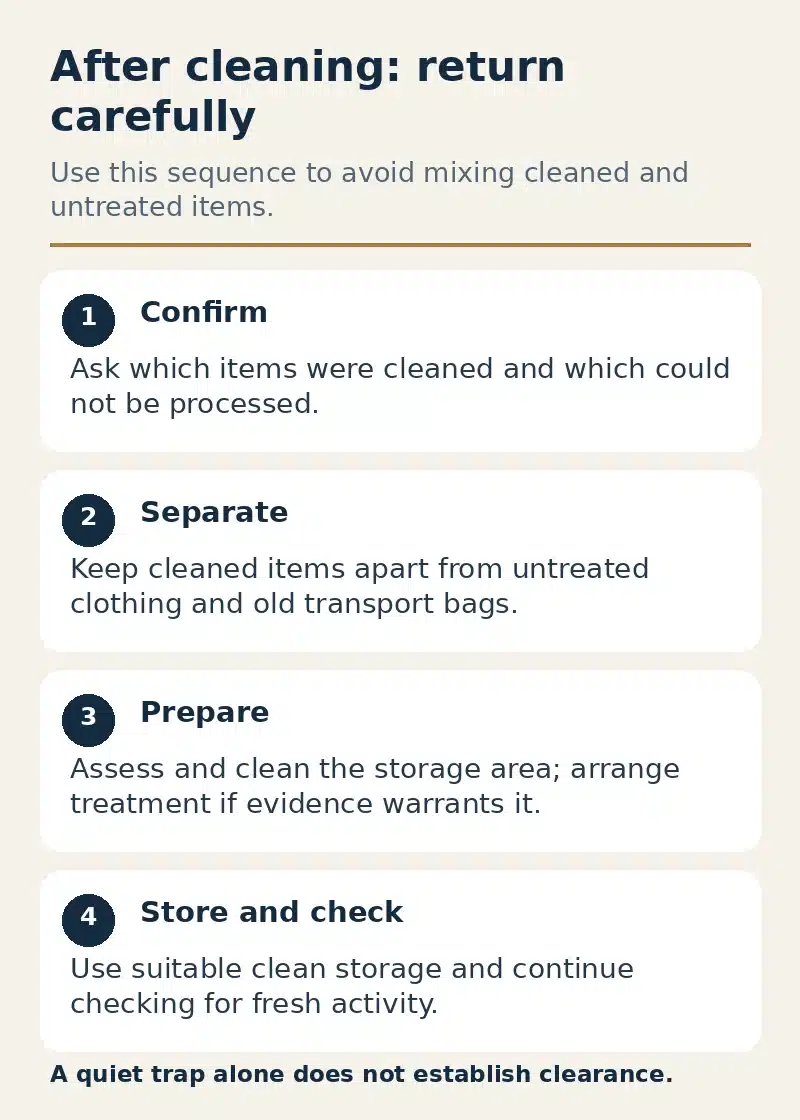
- Confirm what was cleaned. Match the returned pieces to your list. Keep declined or unresolved items separate and clearly identified.
- Keep the clean group separate. Do not put it beside suspect garments while you finish sorting. Use an appropriate clean container and follow the cleaner’s advice about drying, airing and packaging.
- Use prepared storage. Return items only to the area you have assessed and prepared. For longer storage, follow our guide to storing clothes to prevent moths, including clean, dry clothing and suitable sealed storage.
- Continue checking. Keep dated notes of fresh sightings or damage. Specialist moth monitoring can support an investigation, but a trap is not a substitute for finding larvae and affected material.
Photographs taken before cleaning provide a useful comparison. An old hole still being present is not evidence of fresh feeding. Record any new finding with its date and location rather than relying on memory, and share that information if you need a follow-up assessment.
Could washing or freezing replace dry cleaning?
Sometimes an item has another suitable care route, but suitability must come first. A routine cool wash should not be assumed to provide pest control, and a wool garment should not be put through a hot wash simply because a general moth guide recommends heat. Follow the care label and get professional advice where it is restrictive or unclear.
Domestic freezing also needs more than an improvised spell in a freezer: the item, packaging, freezer performance and treatment conditions all matter. For valuable, large or delicate textiles, ask a cleaner, conservator or pest specialist for an appropriate plan. Do not experiment with a household oven, microwave or unverified heating method.
When garment cleaning needs a wider treatment plan
Seek specialist help if activity continues, several rooms or textile types are affected, or the source appears to involve fitted carpets or inaccessible areas. Explain what has already been cleaned and what remains unresolved. That makes it easier to plan the property work around garment collection and storage.
Moth Treatment Pros is a specialist textile-pest company and part of the ThermoPest group. Our moth treatment service addresses the property assessment; professional moth heat treatment may form part of a plan where appropriate. The method and scope should follow the findings and the contents of the home.
If you need help coordinating the next steps, review the current treatment pricing and contact Moth Treatment Pros with the affected rooms, materials and cleaning already arranged. Dry cleaning can be a useful part of resolving the problem, provided the source and the cleaned items’ return are planned too.
Frequently asked questions
Does dry cleaning kill moth eggs and larvae?
An appropriate dry-cleaning process can kill clothes-moth eggs and larvae on suitable garments. Tell the cleaner about the suspected infestation and confirm that the proposed process is suitable for the complete item. Cleaning does not protect it from later exposure.
Do I need to dry-clean every item in my wardrobe?
There is no useful blanket rule. Assess the affected items, nearby vulnerable textiles and signs of activity. Some washable items may have another suitable cleaning route; delicate or valuable pieces need individual advice. Keep suspect items separate while deciding.
Why are there still moths after my clothes have been dry-cleaned?
Cleaning garments does not remove a source in carpets, furnishings or other stored textiles. Cleaned items can also be exposed again. Continuing sightings call for a review of the source and the wider room; they do not by themselves prove that the garment cleaning failed.
Will dry cleaning repair moth holes?
No. Killing the pest does not replace missing fibres. Ask about repair or conservation separately, and photograph existing damage before cleaning so that you can distinguish it from any later change.
Is dry cleaning the same as professional moth heat treatment?
No. Dry cleaning addresses suitable items accepted by the cleaner. Professional moth heat treatment has a different scope and requires an assessment of the affected area, contents and treatment plan. Garment care and treatment of the home may both be needed.