

Carpet moth infestations start when textile-moth eggs or larvae reach a suitable animal-based material and survive in a sheltered place. They may be introduced on a rug, stored clothing or upholstered item, or develop from another concealed source nearby. Wool, hair, fur, feathers, warmth and low-disturbance areas help an infestation persist, but a “dirty carpet” does not create moths by itself.
That distinction matters. The route by which moths arrived, the material currently supporting larvae and the conditions that let them remain may be three different things. Finding the real cause means following evidence rather than blaming the first moth or damaged patch you notice.
First, what does “carpet moth” mean?
“Carpet moth” is a practical name for textile-feeding moths found in carpets; it is not a precise species name. In UK homes, the common clothes moth and case-bearing clothes moth are among the species whose larvae can damage animal-derived fibres. The adult moth is the reproductive stage. It is the larva that feeds.
This is also why identification comes before treatment. Carpet beetle larvae can damage similar materials, while pantry moths infest dried foods rather than carpet. A small outdoor moth that has flown towards a light may have no connection with textile damage at all. Our guide to the carpet moth life cycle explains the egg, larval, pupal and adult stages in more detail.
The four parts of a carpet moth infestation
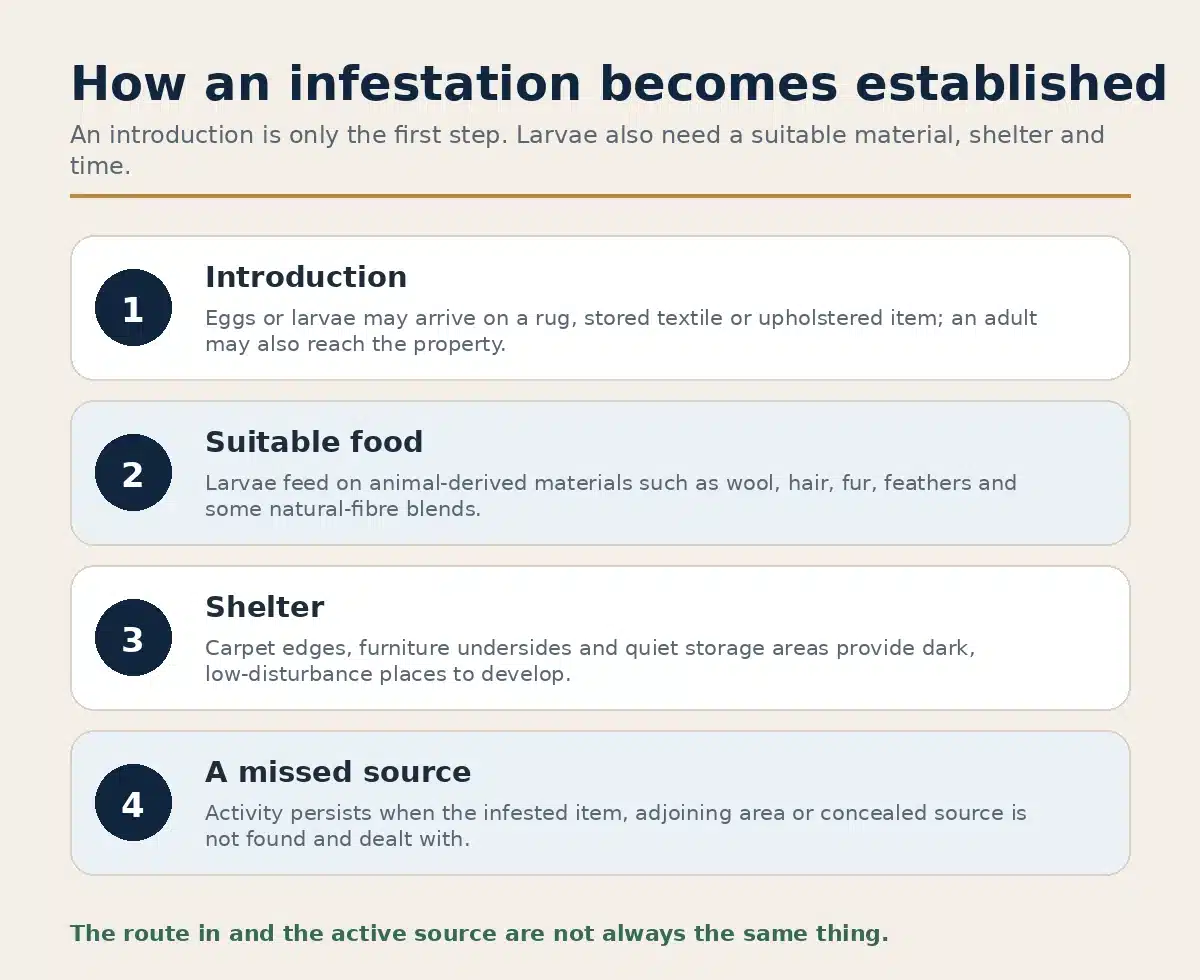
An established infestation normally needs four things: an introduction, suitable larval food, a protected place and enough time for development. A fifth factor often explains recurrence: the active source was never located, or connected items and areas were not considered.
How carpet moths get into a home
Introduced rugs, furnishings and stored textiles
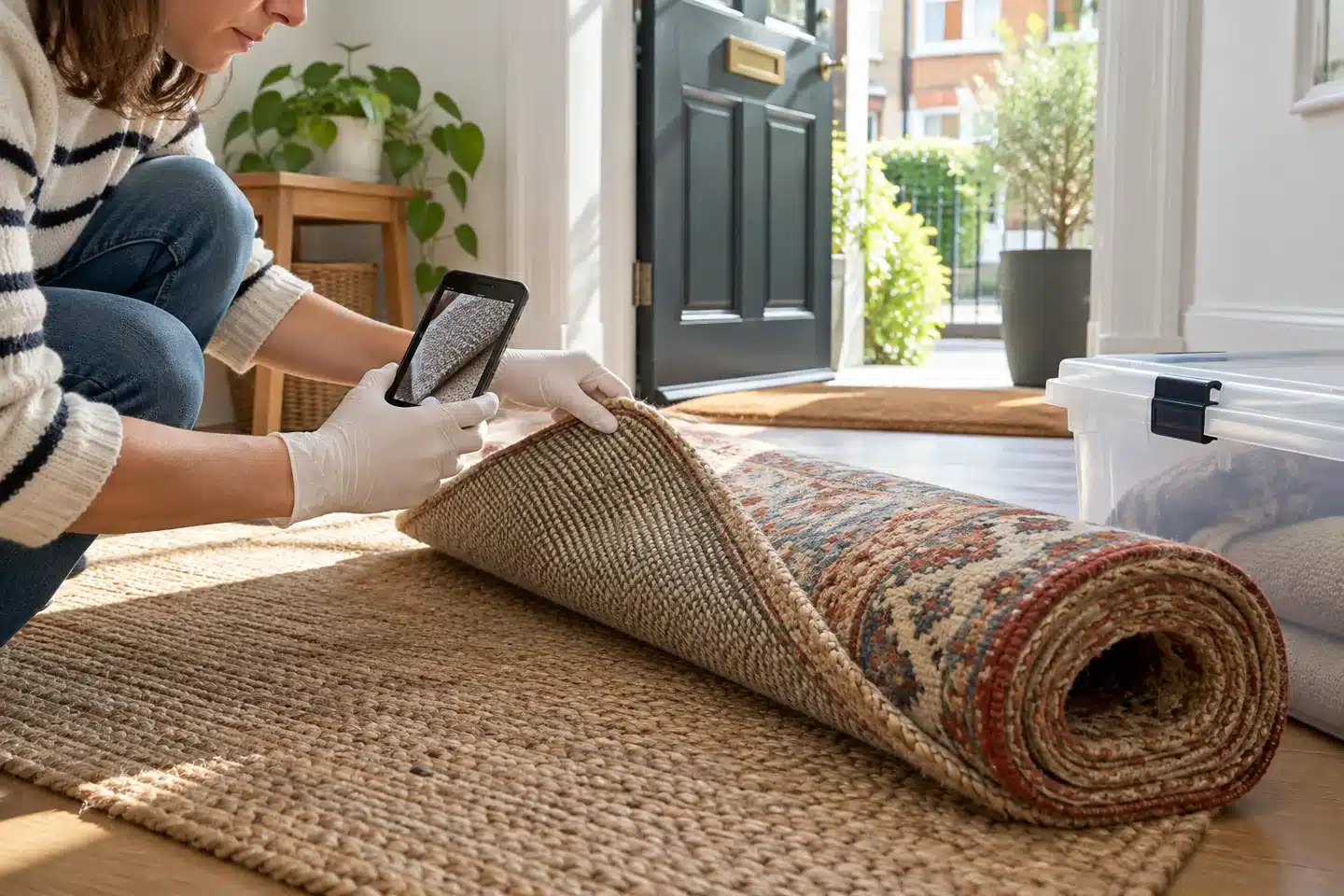
One possible route is an item that already carries eggs, larvae or larval cases. Wool rugs, upholstered furniture, stored woollens, blankets, costumes and boxes of natural-fibre textiles all deserve consideration, particularly if activity begins after an item arrives or is taken out of storage.
That timing is a clue, not proof. Eggs and young larvae are easy to overlook, and a long-established source elsewhere in the room may only become obvious at the same time. Before bringing a second-hand rug or textile indoors, inspect both sides, seams, folds and protected edges in good light. Keep a suspect item contained until you are confident it is clear.
Adult moths moving into the property
An adult textile moth can move through an open door or window, but seeing one adult does not establish where it came from or whether it has laid eggs. Textile moths are often inconspicuous and associated with darker, quieter places. If you repeatedly find adults in one area, use that pattern to guide a physical inspection rather than assuming the window is the source.
A concealed source inside or beside the room
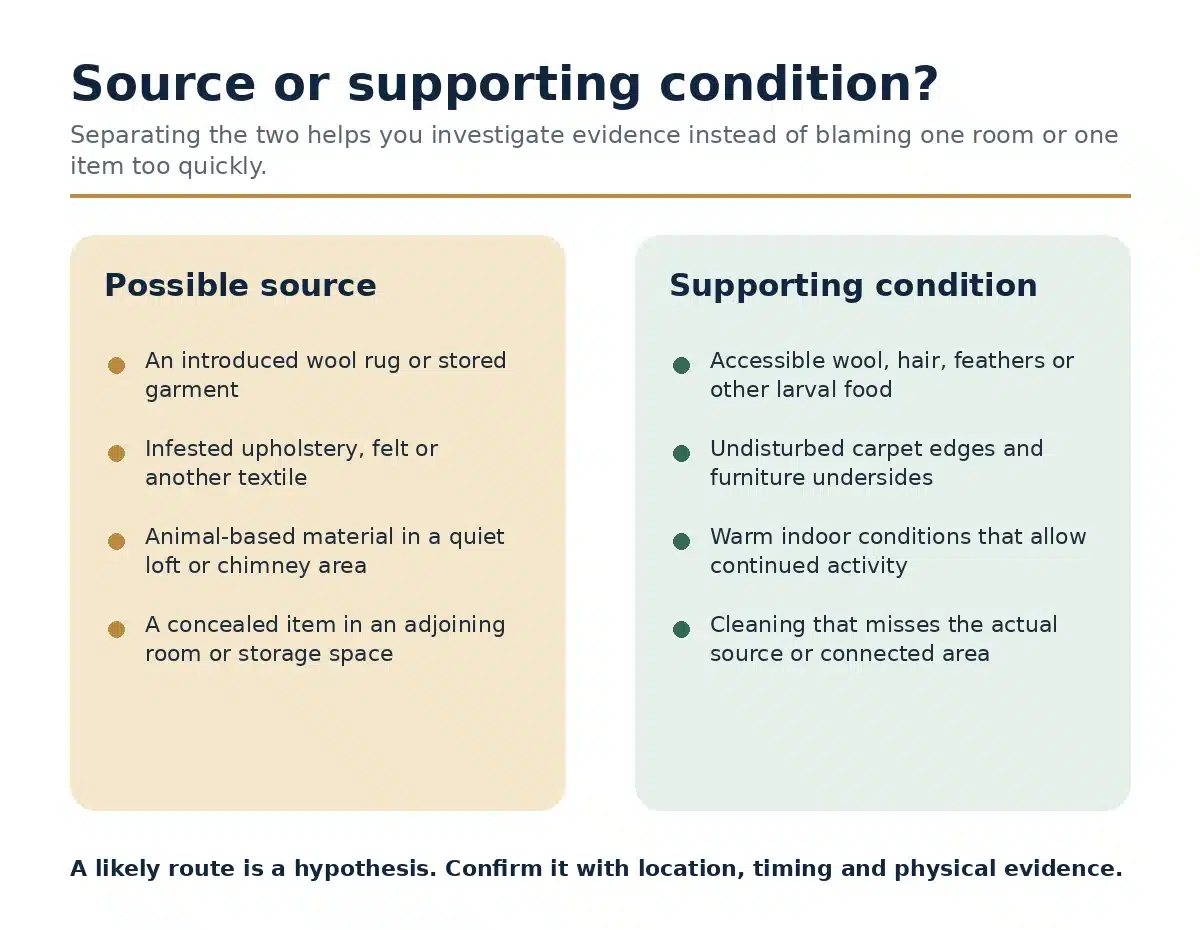
The item that sustains larvae may not be the visible carpet. Possible sources include wool underlay, upholstered furniture, stored clothing, felt, hair or feather-filled objects, and animal-derived material in a quiet roof, chimney or storage area. The British Pest Control Association advises that birds’ nests can support some clothes-moth infestations. That possibility is relevant only where the location and building evidence make it plausible.
Why some homes support an infestation
Animal-derived fibres provide food
Textile-moth larvae digest keratin, a protein found in materials such as wool, hair, fur and feathers. A wool carpet, wool-blend rug, animal-hair filling or feathered item can therefore provide food. Damage to cotton or a synthetic surface does not automatically prove that larvae were eating that fibre; the fabric may contain a blend, staining or nearby animal-derived material. Our article on moths and cotton explains that distinction.
Quiet, dark edges protect larvae
Larvae do well where cleaning and movement rarely reach: under heavy furniture, along carpet edges, behind skirting gaps, inside cupboards and among folded textiles. Human and pet hair, lint and other organic material can collect in the same places. Cleaning does not make eggs appear, but regular access to these areas removes debris, reveals damage earlier and makes them less favourable.
Warm indoor conditions allow activity to continue
Central heating can allow development to continue when outdoor conditions are cooler. Warmth alone does not cause an infestation—it cannot create eggs or larvae—but it can shorten the time between stages when food and shelter are already present. This is one reason activity may continue outside the period when homeowners expect to see moths.
The true source is missed
Surface vacuuming can remove some loose material and exposed life stages, yet activity may return if larvae remain beneath furniture, at a carpet perimeter or in another item. A room can also contain more than one affected material. In flats and terraced properties, adjoining areas are worth considering when evidence points that way, but recurrence alone does not prove that neighbours are responsible.
What does not cause carpet moths by itself?
- A dirty home: an infestation requires insects plus suitable material. Even a well-kept property can acquire moths, although accumulated hair and undisturbed debris can make some areas more supportive.
- A new synthetic carpet: pure synthetic fibres are not the usual food, but wool underlay, natural-fibre furnishings, hair, lint or an existing source can be close by.
- One flying moth: it may be a textile moth, pantry moth or harmless outdoor species. Identification and physical evidence are more useful than colour alone.
- Cold weather: outdoor temperature does not rule out activity in a heated building.
- Fresh holes alone: old damage can become visible when furniture moves or fabric stretches. Look for larvae, webbing, portable cases, shed skins and a pattern of new damage.
How to investigate the likely cause
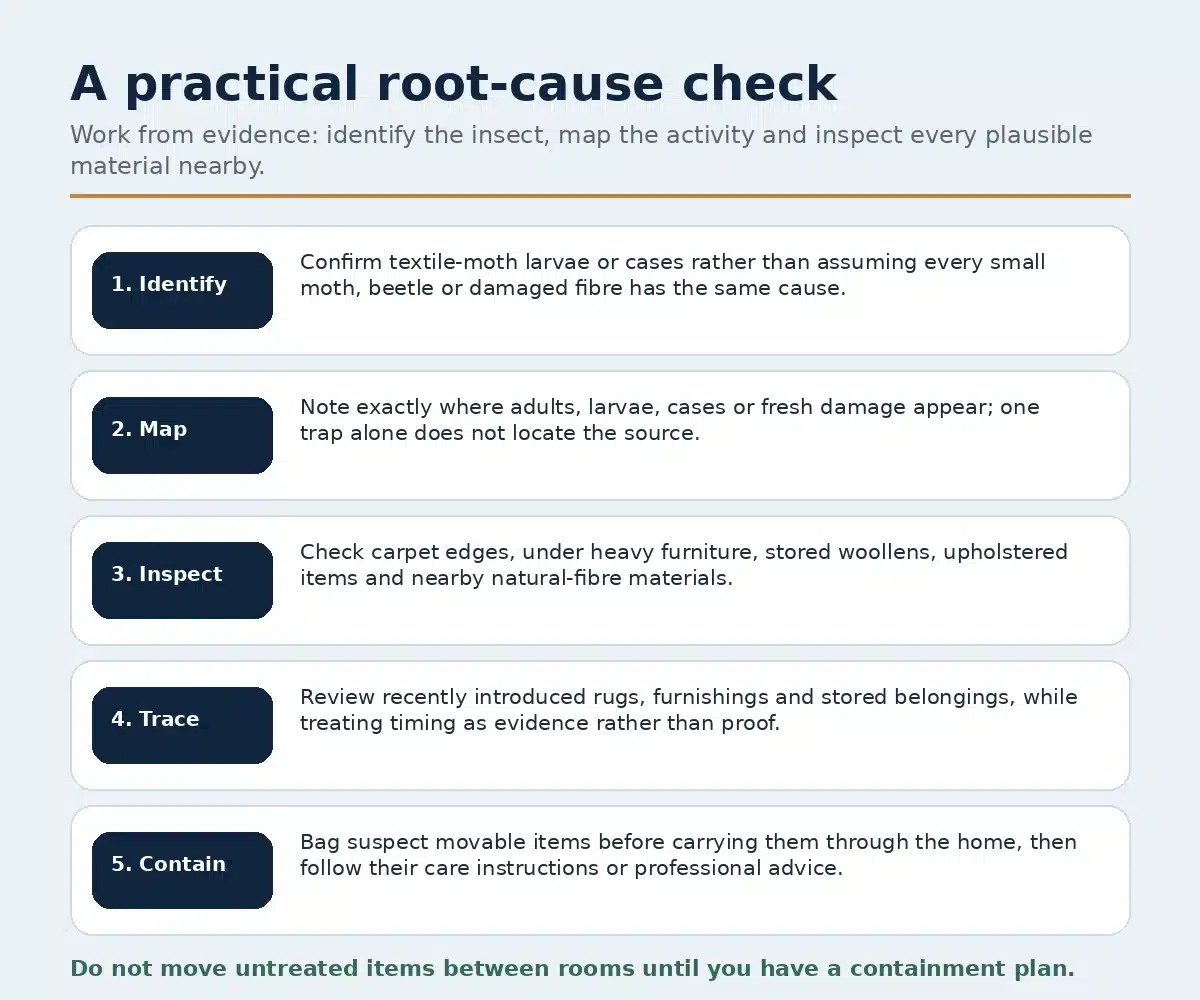
A useful investigation works from the point of strongest evidence outwards. Avoid carrying loose textiles from room to room while you are still mapping the problem.
- Confirm the pest. Photograph or retain a specimen where practical. Compare larvae, cases and damage with textile moths and carpet beetles.
- Map the evidence. Note the room, exact edge or item, date, life stage and whether damage appears recent. Monitoring traps can indicate adult activity, but do not by themselves pinpoint larvae.
- Inspect every plausible material nearby. Check carpet perimeters, furniture undersides, woollen items, upholstery, stored textiles and quiet cupboards. Use our detailed home moth inspection guide as a room-by-room reference.
- Review recent changes. List rugs, furniture, stored boxes or clothing introduced or reopened before activity was noticed. Treat the timeline as evidence, not a verdict.
- Check connected spaces. Where the evidence is concentrated at a doorway, service gap, chimney, loft or shared boundary, assess the adjoining area before concluding the source has been removed.
What to do once you have found a likely source
Contain suspect movable items before carrying them through the property. Follow each textile’s care label and seek specialist textile-conservation advice for valuable or delicate pieces. Vacuum accessible carpet edges and furniture gaps methodically, then dispose of vacuum contents outside the living area. Cleaning is useful, but it is not a substitute for treating an established, dispersed infestation.
Use moth monitoring to track adult activity and guide inspection, not as a stand-alone cure. If larvae or fresh damage occur in several rooms, inaccessible areas are implicated, or activity continues after careful source removal, a professional survey can define the treatment area and options. Moth Treatment Pros, part of the ThermoPest group, provides specialist moth treatment for London homes, including methods suited to the property, materials and extent of the infestation.
You can review our moth treatment pricing or contact the team with photographs and details of where you have found activity. We will not treat a single adult sighting as proof of a carpet infestation; the evidence and likely source come first.
Frequently asked questions
Can carpet moths come through open windows?
An adult textile moth can enter through an open door or window, but one sighting does not prove that this is how an infestation began. Look for larvae, cases or fresh damage around suitable materials to locate the active source.
Can carpet moths live in synthetic carpet?
Pure synthetic fibre is not their usual food. Larvae may still be present where the carpet contains a wool blend, sits over wool underlay, traps animal hair and lint, or lies beside another animal-derived material.
Does a dirty carpet cause carpet moths?
No. Moths must first be introduced, and larvae need suitable material. Hair, lint and undisturbed debris can make hidden areas more supportive, so thorough cleaning helps with prevention and early detection without making infestation a judgement on housekeeping.
Can second-hand rugs bring carpet moths into a home?
They can be one possible route if eggs or larvae are already present. Inspect both sides, seams and folds before bringing a rug indoors, but remember that timing alone does not prove which item introduced the infestation.
Why do carpet moths keep coming back after cleaning?
A concealed source, untreated life stages, another affected item, a connected area or incorrect pest identification may explain continued activity. Map sightings and damage, inspect nearby natural-fibre materials and use monitoring to judge the pattern.