

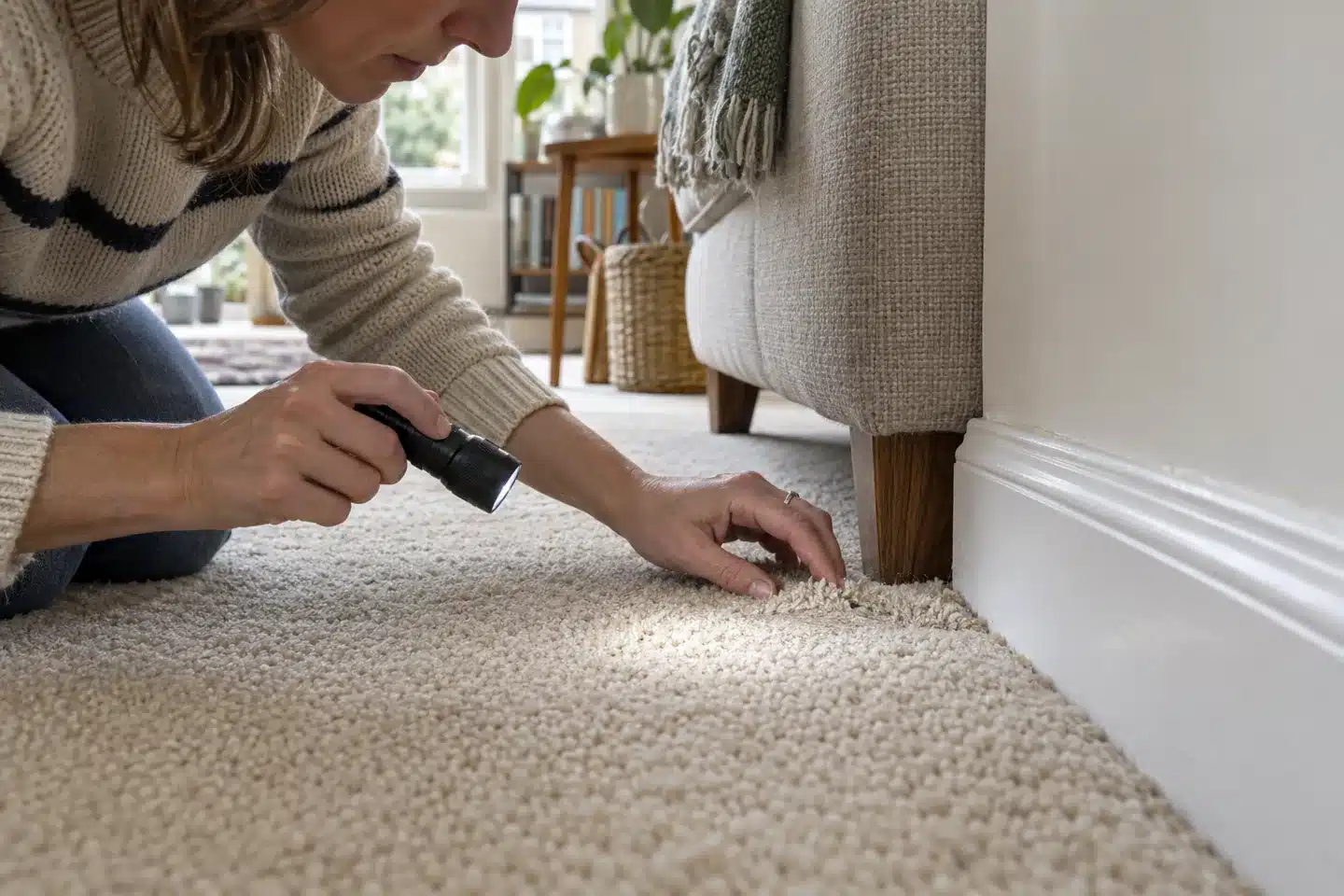
Seeing one small moth does not always mean you have a serious infestation. The problem is that the insects doing the damage are usually not the adults you notice flying around. Carpet and clothes moth larvae can stay hidden in dark, undisturbed areas while feeding on wool, cashmere, feathers, fur and other natural fibres.
This guide explains exactly how to check for moths, room by room and item by item. It covers the signs to look for, the places people most often miss, how to tell moth damage from other textile pests, when monitoring is enough, when treatment is sensible, and the potential cost of leaving an infestation untreated.
Quick answer: how do you check for moths?
To check for moths, use a torch to inspect carpet edges, beneath furniture, under rugs and inside wardrobes. Look for pale larvae, silken webbing or cases, gritty debris, thinning carpet and irregular clothing holes. Photograph evidence before cleaning, inspect neighbouring textiles and use suitable pheromone traps to monitor adult activity.
If you find activity in more than one area, repeat sightings after cleaning, or fresh damage to fitted wool carpet, the infestation is more likely to be established and a professional assessment becomes worthwhile.
The signs of moths to look for
A proper moth check means looking for the whole lifecycle rather than relying on flying adults alone. This guide concerns textile moths. Moths or webbing inside flour, cereal, nuts or pet food suggest a stored-product pest and require a separate inspection of food cupboards.
1. Small adult moths
The common clothes moth is a small, straw-gold moth, usually around 5–8 mm long at rest. Other textile moth species can look different, so colour alone is not enough for identification. Textile moths are much smaller and less conspicuous than many outdoor moths. They often avoid strong light and may run or flutter into darker areas when disturbed. Repeated sightings in bedrooms, living rooms, wardrobes or carpeted areas should prompt a closer inspection.
Adult moths are useful as a warning sign, but they are not the stage causing holes in your carpet or clothing.
2. Cream-coloured larvae
The larvae are the damaging stage. They are small, pale caterpillar-like insects that feed on animal-based fibres. Depending on the species and conditions, they may be difficult to spot because they stay amongst carpet pile, under furniture, inside folds of clothing or within silken material.
Textile moth larvae typically have a pale body and a darker head. If you find live larvae associated with webbing and fabric damage, treat that as stronger evidence of active infestation than a single adult moth. Photograph them beside a ruler without crushing them, or keep a sample in a closed clear container for identification.
3. Eggs, silken webbing, tubes or cases
Moth eggs are tiny and pale, and can be tucked between fibres or in folds. They are difficult to identify reliably without magnification. Do not assume every white speck is an egg, or that failing to see eggs means a textile is clear.
Fine webbing can collect fibres, lint, dust and debris and may be visible around carpet edges, under furniture or on damaged textiles. Some moth larvae create portable cases or tube-like structures that can look like tiny pieces of fluff attached to the surface.
4. Gritty debris or frass
Larval feeding can leave small gritty particles mixed into fibres. This is easy to mistake for ordinary dirt, especially along skirting boards and beneath furniture. If debris appears beside thinning carpet or webbing, inspect the area carefully.
5. Bald patches or thinning carpet
Carpet moth damage often begins where people do not walk regularly: under sofas and beds, beneath wardrobes, along skirting boards, in corners and under the edges of rugs. The carpet may look shaved, loose or patchy before a full hole appears.
6. Irregular holes in clothes and other textiles
Wool, cashmere, silk, fur, feathers and blended fabrics containing natural fibres are particularly vulnerable. Damage can appear around folds, seams, cuffs and areas that have been stored undisturbed.
7. Repeated moths from the same part of a room
If moths repeatedly appear from one wardrobe, one section of carpet or one piece of furniture, that pattern is useful. The breeding source is often close to where activity keeps returning.
Step-by-step: how to check your home for moths
Before you start: gather a torch, phone camera, magnifier, sealable bags and a sheet of white paper. Inspect before vacuuming so that you can record the evidence. Work around one room at a time, and note any areas you cannot reach.
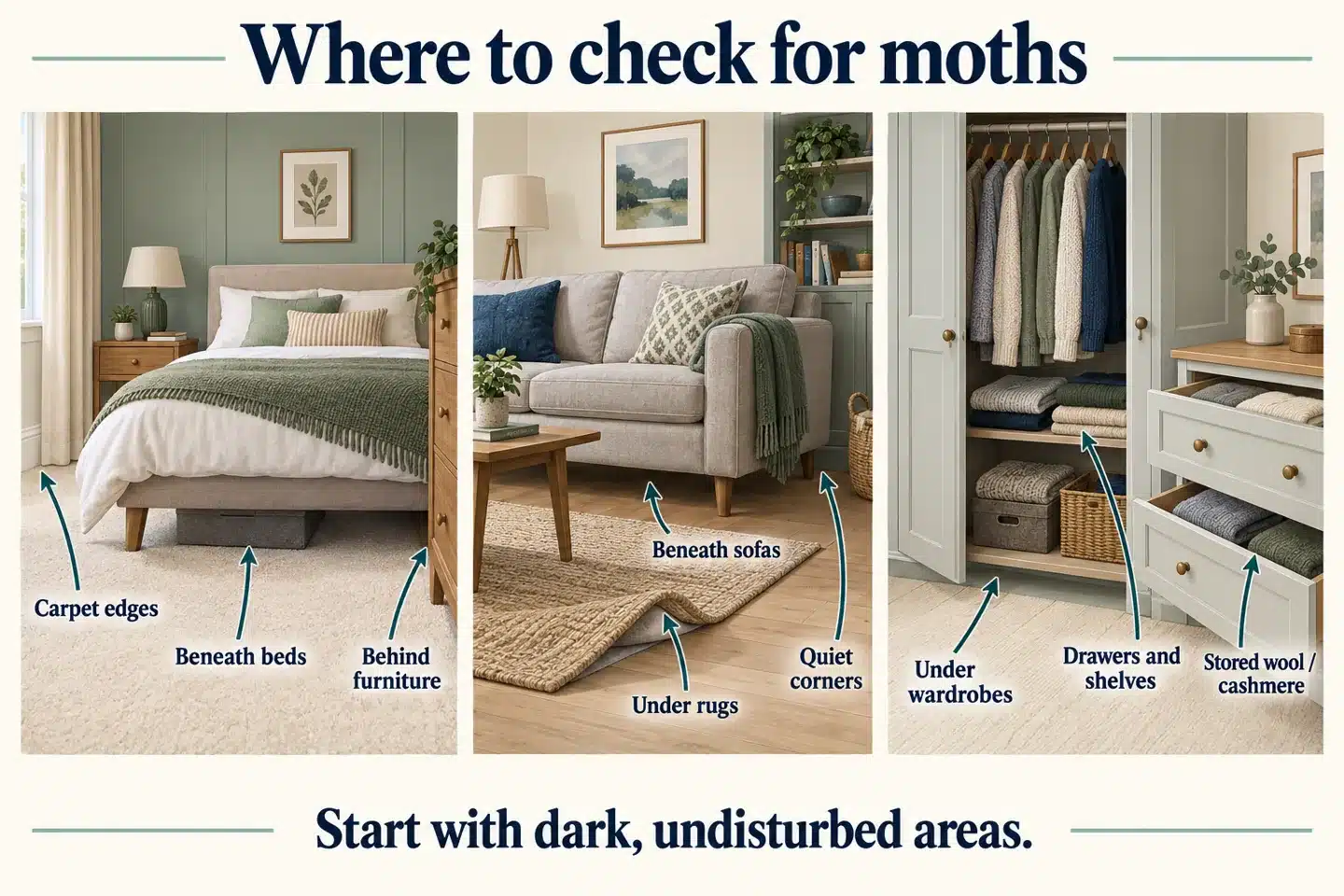
Step 1: start with the room where you saw activity
Do not immediately move everything around the house. Begin where the moth, larva or damage was first noticed. Note the exact location and inspect outward from that point.
Use a bright torch and, if possible, a phone camera to photograph anything suspicious. Small larvae, cases and webbing can be easier to compare when enlarged on a screen.
Step 2: inspect carpet edges first
Run your inspection around the perimeter of the room. Look closely where the carpet meets the skirting board, especially behind curtains, beside radiators and in corners.
Part the carpet pile with your fingers or a blunt tool and check for:
- thinning or missing fibres;
- webbing amongst the pile;
- small pale larvae;
- cases or shed material;
- gritty debris; and
- areas that appear a different colour because the upper fibres have been eaten away.
Step 3: move furniture and inspect underneath
This is one of the most important stages. Moth larvae prefer low-disturbance areas, so the carpet beneath a heavy bed, sofa, chest of drawers or wardrobe can be significantly worse than the visible floor.
Move furniture safely where practical; get help with heavy pieces and do not detach fitted wardrobes or drag furniture across a delicate carpet. Use a torch and phone camera for gaps you cannot reach. Pay particular attention to furniture that has not been moved for months or years. Check both the carpet and the underside of upholstered items.
Step 4: check wardrobes, drawers and stored clothing
Remove natural-fibre garments one at a time rather than shaking everything together. Inspect wool, cashmere, silk and other vulnerable materials in good light.
Look along seams, cuffs, collars, pockets, folds and beneath labels. Clothing moth activity can be very localised, so one damaged jumper does not mean every item is affected—but it does mean the surrounding storage area deserves a thorough check.
Our guide on how to store clothes to prevent moth damage explains how to clean and store garments once you have completed the inspection.
Step 5: inspect rugs and the carpet beneath them
Lift rugs completely rather than checking only the exposed surface. Inspect the underside, edges and the carpet or flooring below. Natural-fibre rugs can support activity themselves, while an undisturbed carpet area beneath a rug can provide a protected harbourage.
Step 6: check upholstered furniture and soft furnishings
Inspect seams, folds, undersides and areas where lint and hair collect. Pay extra attention to wool upholstery, feather-filled items and natural-fibre fabrics. Moths can sometimes persist in a room even after carpet cleaning because another textile source has been missed.
Step 7: inspect cupboards, storage spaces and quiet corners
Look inside low cupboards, under beds, behind boxes, beside stored suitcases and around rarely moved items. Dust and hair can contain enough animal material to support some textile pests, so undisturbed storage areas matter even if there is no obvious wool garment nearby.
Step 8: check neighbouring rooms
If activity persists despite careful checks, record inaccessible fitted units, floor gaps and loft or chimney areas for a professional survey. Old animal-based material in hidden spaces can be relevant; do not dismantle fittings or disturb nests to investigate.
If you find clear activity, inspect rooms immediately beside, above or below the affected space where practical. Do not assume the infestation stops at a doorway. At the same time, avoid moving suspect textiles unnecessarily, as this can spread material from one area to another.
Step 9: use pheromone monitoring correctly
Pheromone traps can help detect adult male moth activity and show whether captures rise or fall over time. They are useful for moth monitoring, but they do not kill hidden eggs and larvae and should not be treated as a complete treatment.
Choose a trap labelled for the moth species being investigated; a pantry-moth lure is not interchangeable with a clothes-moth lure. Follow the manufacturer’s placement and replacement instructions. Date each trap, give it a room/location label, and record catches consistently, for example weekly.
An empty trap does not prove the room is clear. Larvae may still be feeding while no adult males are being caught. Wrong lures, expired lures and unsuitable placement also affect results. Compare captures with fresh damage and live evidence, not just the previous trap total.
How to tell how serious the infestation is
There is no reliable household moth-count threshold. These are practical inspection categories, not a diagnosis of how long moths have been present. A small visible patch can conceal a larger source beneath furniture.
Separate old damage from current activity: existing holes and bald patches remain after control. Photograph a patch beside a ruler, record the date, clean away loose debris and recheck the same spot. New damage, fresh debris or live larvae support ongoing activity; an old empty case alone does not prove it.
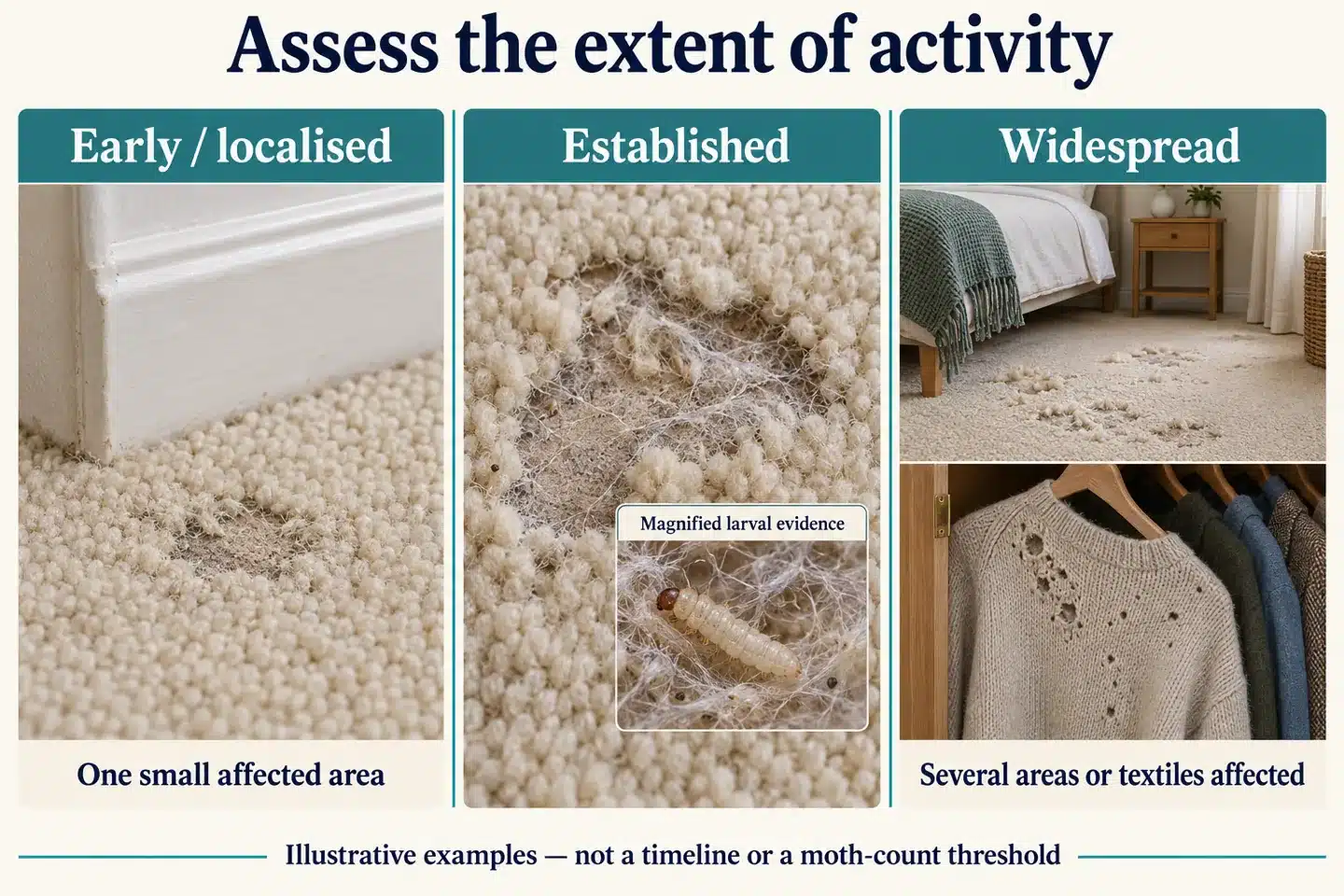
Early, uncertain or localised activity
A single adult with no other evidence is an uncertain sighting, not a confirmed infestation. Inspect and monitor before assuming treatment is needed. A small patch of damage confined to one item may be localised, but check nearby carpet and stored textiles before deciding its extent.
If live textile-moth larvae are confirmed, address the affected item and surroundings promptly, even when the area is small. Seek advice if you cannot identify or reach the source.
Established activity
- repeated adults in the same room;
- larvae, webbing or cases found;
- fresh thinning or damage to carpet or clothing; or
- activity returning after cleaning.
This is the point where professional treatment is usually worth considering because the source has probably moved beyond an isolated adult moth.
Widespread or severe activity
- several rooms affected;
- damage beneath large furniture or fitted units;
- multiple textiles affected;
- heavy larval evidence; or
- activity continuing despite previous DIY or professional attempts.
A wider infestation normally needs a planned treatment rather than treating individual visible spots.
Is it definitely moths? Check for carpet beetles too
Not all textile damage is caused by moths. Carpet beetle larvae can also damage natural fibres. They are typically hairy or bristly, and their shed skins are often easier to notice than the insects themselves.
Carpet beetle larvae are often brown and visibly bristly, with cast skins retaining those hairs. They do not make the silken feeding tunnels associated with clothes moths. Adult carpet beetles are small beetles with hard wing cases, not moths. Ordinary wear can also thin carpet, especially on walkways, but does not produce live larvae or feeding webbing.
If what you find is hairy rather than smooth and cream-coloured, compare it with our carpet beetle identification and treatment guide before deciding what to do next.
What to do immediately if you find moths
- Photograph the evidence. Record the location before cleaning it away.
- Isolate badly affected movable textiles. Bag suspect items before carrying them through the property.
- Vacuum carefully. Concentrate on carpet edges, furniture undersides and cracks. Seal the collected contents in a bag and put them in an outside bin promptly. Vacuuming removes accessible material but cannot prove every egg or larva is gone.
- Clean affected garments appropriately. Follow care labels and tell your dry cleaner about suspected moths. Do not hot-wash delicate wool or improvise whole-room heating. Keep cleaned items separate from uninspected textiles.
- Inspect rather than spray blindly. General household aerosol use can miss hidden larvae and may make it harder to understand where activity is centred.
- Monitor the area. Keep track of new moth sightings or captures after cleaning.
- Escalate if activity continues. Repeated evidence usually means the source has not been removed.
Professional moth treatment options
The best treatment depends on the size of the infestation, the materials affected, access and whether the activity is concentrated or widespread. Our main moth treatment methods guide explains the options in more detail.
Moth heat treatment
Professional moth heat treatment is designed to raise affected areas to controlled temperatures capable of targeting moths across their lifecycle. It can be particularly useful for established infestations, difficult harbourages and situations where a single intensive visit is preferable.
Targeted insecticide spray programmes
Moth spray treatment can be appropriate for localised activity around carpet edges, skirting boards and other harbourages. Because eggs may hatch after an initial visit, a structured programme can require repeated treatments rather than one application.
ULV treatment
ULV moth treatment disperses a fine insecticide mist and may support a wider treatment plan. It is fogging rather than gas fumigation. It should not be assumed to penetrate sealed voids, folded clothes or deep carpet layers, or to replace source removal and targeted treatment of hidden larvae.
Monitoring and follow-up
For low-level or uncertain activity, monitoring can help establish where moths are active before a more disruptive treatment is selected. It is also useful after treatment to check whether activity is falling as expected.
The cost of not dealing with a moth infestation
The cost of moths is not just the treatment bill. Delay can turn a small, localised problem into replacement costs that are much harder to control.
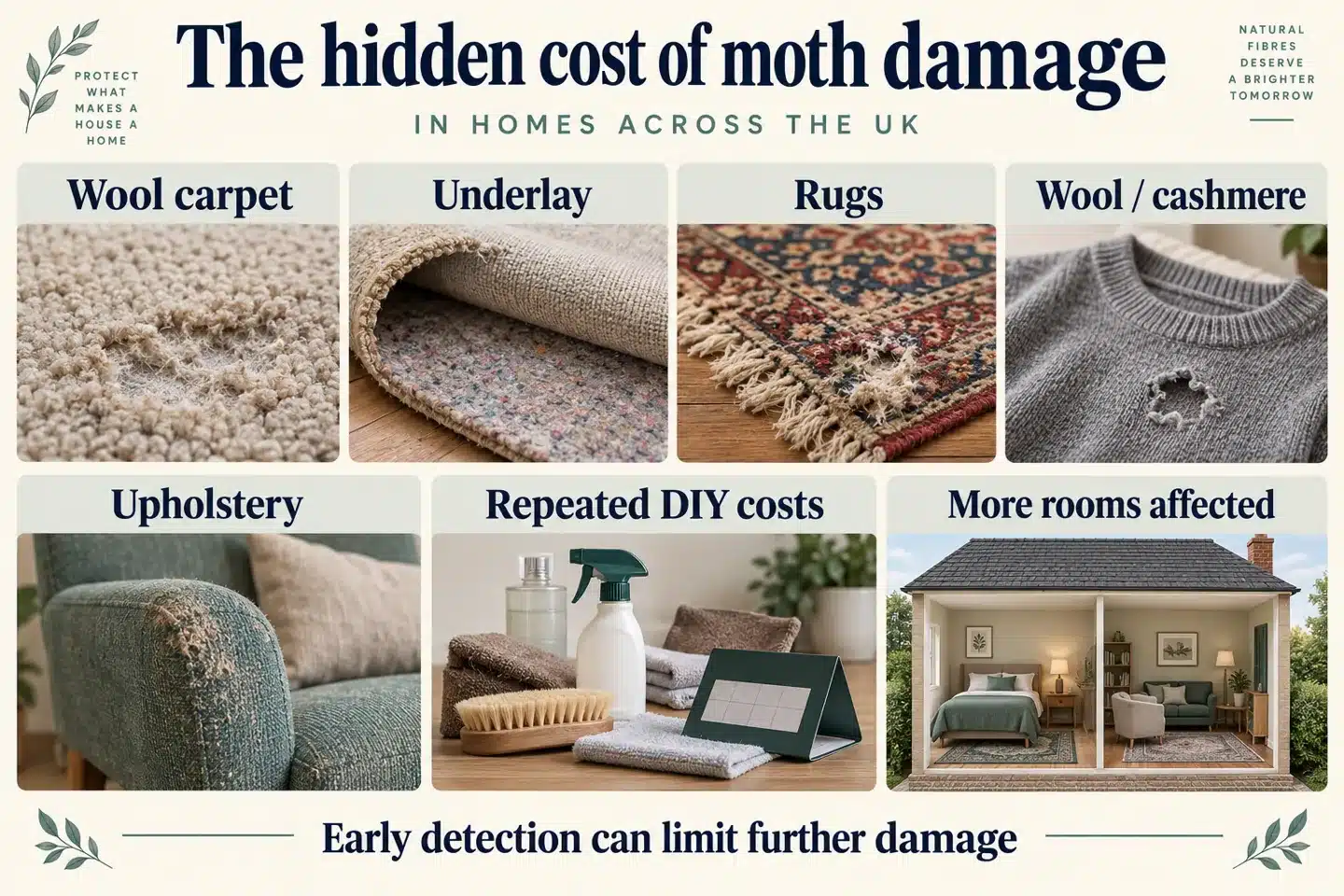
Carpet replacement
If larvae damage fitted wool carpet, the affected fibres do not grow back. A small hidden patch beneath furniture may be tolerable, but widespread thinning, exposed backing or visible bald areas can mean replacing part or all of the carpet.
Ask a carpet fitter to assess whether a local repair is practical before replacing an entire room. A replacement quote may include the carpet, uplift, disposal, fitting and any necessary underlay or gripper work. Colour matching and joining can make a small visible patch difficult to repair neatly.
Underlay and refitting costs
Underlay does not automatically need replacing because moths are present. Its material, condition and evidence of contamination matter; wool or animal-fibre felt deserves particular inspection. If replacement is needed, it adds material and labour costs. Inspect and resolve the source before laying new carpet so that replacement does not leave hidden activity untouched.
Clothing and wardrobe contents
One damaged jumper may be replaceable. A collection of cashmere, wool coats, suits, dresses or stored seasonal clothing can be worth far more than the cost of controlling the infestation. Sentimental or discontinued items may not be replaceable at all.
Rugs and upholstered furniture
Handmade rugs, wool upholstery and feather-filled furnishings can be expensive to repair or replace. Damage may also reduce resale value even where an item remains usable.
Repeated cleaning and failed DIY treatment
Another hidden cost is repetition: replacing traps, buying sprays, moving furniture, laundering items and repeatedly deep-cleaning the same rooms without reaching the breeding source. A cheap first attempt can become expensive if it delays an effective solution.
Spread into additional rooms
The more rooms involved, the more inspection, preparation and treatment may be required. Early detection matters because one affected carpet edge is much simpler to manage than activity across bedrooms, stairs, wardrobes and living areas.
If you want to compare professional options, see our current moth treatment pricing. A survey can help you compare control, repair and replacement options for the materials actually affected.
A 15-minute moth inspection checklist
If you want a fast first check before doing a full room-by-room inspection, use this order:
- Check carpet edges behind doors and curtains.
- Look underneath the bed or sofa.
- Inspect the darkest corner of the room.
- Check one rarely moved piece of furniture.
- Inspect wool or cashmere stored nearby.
- Lift the edge of any rug.
- Look for webbing, cases, larvae and gritty debris.
- Record any adult sightings and where they occurred.
Allow roughly three minutes for edges, five for accessible furniture and rugs, five for nearby clothing and two to photograph and record findings. This is a first check of one room, not a whole-home clearance. Do not rush moving heavy furniture to meet the time limit.
If all eight checks are clear, continue monitoring rather than assuming a single flying moth proves a major infestation. If you find live larvae or damage, expand to a full inspection even if only one check is positive.
Common mistakes when checking for moths
Only looking for flying moths
Adults are the most visible stage but larvae are the damaging stage. A room can have meaningful damage even when you rarely see an adult flying.
Checking the middle of the carpet but not the edges
Busy, well-lit floor areas are often the least useful places to look. Move towards edges, furniture, cupboards and undisturbed zones.
Throwing away one damaged item and assuming the problem is solved
The item showing damage may not be the main breeding source. Always inspect the surrounding environment.
Moving suspect items between rooms
Bag them first. Carrying uncovered textiles through the home can move larvae, cases or debris into unaffected spaces.
Using traps as treatment
Traps are useful evidence, not a complete eradication method. They do not remove eggs and larvae hidden in carpets or clothing.
Frequently asked questions
Does seeing one moth mean I have an infestation?
No. One moth can enter from outside or be an unrelated species. Repeated textile-moth sightings, larvae, webbing or fresh fabric damage are much stronger indicators.
Where do carpet moths hide?
Common locations include carpet edges, beneath furniture, inside cupboards, underneath rugs, behind stored items and anywhere natural fibres remain dark and undisturbed.
What does moth damage look like on carpet?
Early damage often looks like thinning, shaved pile or small bald patches rather than a neat hole. It is frequently worst along edges or beneath furniture.
Can moths damage synthetic carpets?
Pure synthetic fibres are not the preferred food source for textile moth larvae, but contamination with natural material, blended fibres, wool content, hair, lint and debris can complicate what you see. Check the carpet composition rather than assuming it is fully synthetic.
Can I deal with moths myself?
Small, uncertain activity may respond to cleaning, isolation and monitoring. Professional treatment is more appropriate when larvae or fresh damage are found, several areas are affected, moths repeatedly return, or valuable wool carpets and textiles are at risk.
Can you have moth larvae without seeing adult moths?
Yes. Larvae may remain hidden in textiles while adults are absent or go unnoticed. Check the material itself; a quiet room and empty traps do not establish that all life stages are absent.
How quickly should I act?
If you have confirmed larvae or fresh damage, act promptly. Waiting gives larvae more time to feed and potentially allows the infestation to spread into additional areas.
Further identification guidance: English Heritage’s guide to clothes moths includes their appearance, feeding evidence and concealed inspection areas.
When to call a moth specialist
Arrange professional help when your inspection finds active larvae, fresh damage, repeated moth captures, more than one affected room or activity that returns after thorough cleaning.
Moth Treatment Pros, part of the ThermoPest group, specialises in textile pests across London. We can assess the affected areas, recommend the most appropriate method and explain whether heat, a spray programme, ULV treatment or monitoring is suitable for the situation rather than applying the same approach to every property.
Start with our professional moth treatment service in London, check the areas we cover, or request an assessment if you have found signs during your inspection.