

Clothes moth larvae do not normally feed on clean, pure cotton as their preferred food. They mainly attack animal-based materials such as wool, cashmere, fur and feathers. However, cotton can still be damaged when it is blended with wool, soiled with food or body residues, or in the way of a suitable food source. The adult moths do not eat your clothing.
That makes “do moths eat cotton?” more useful than a simple yes-or-no question. If a cotton T-shirt develops holes, you need to consider the garment’s composition, the evidence around it and possible non-insect causes before choosing a treatment. This guide concerns textile moths in UK homes, not moth caterpillars feeding on cotton crops.
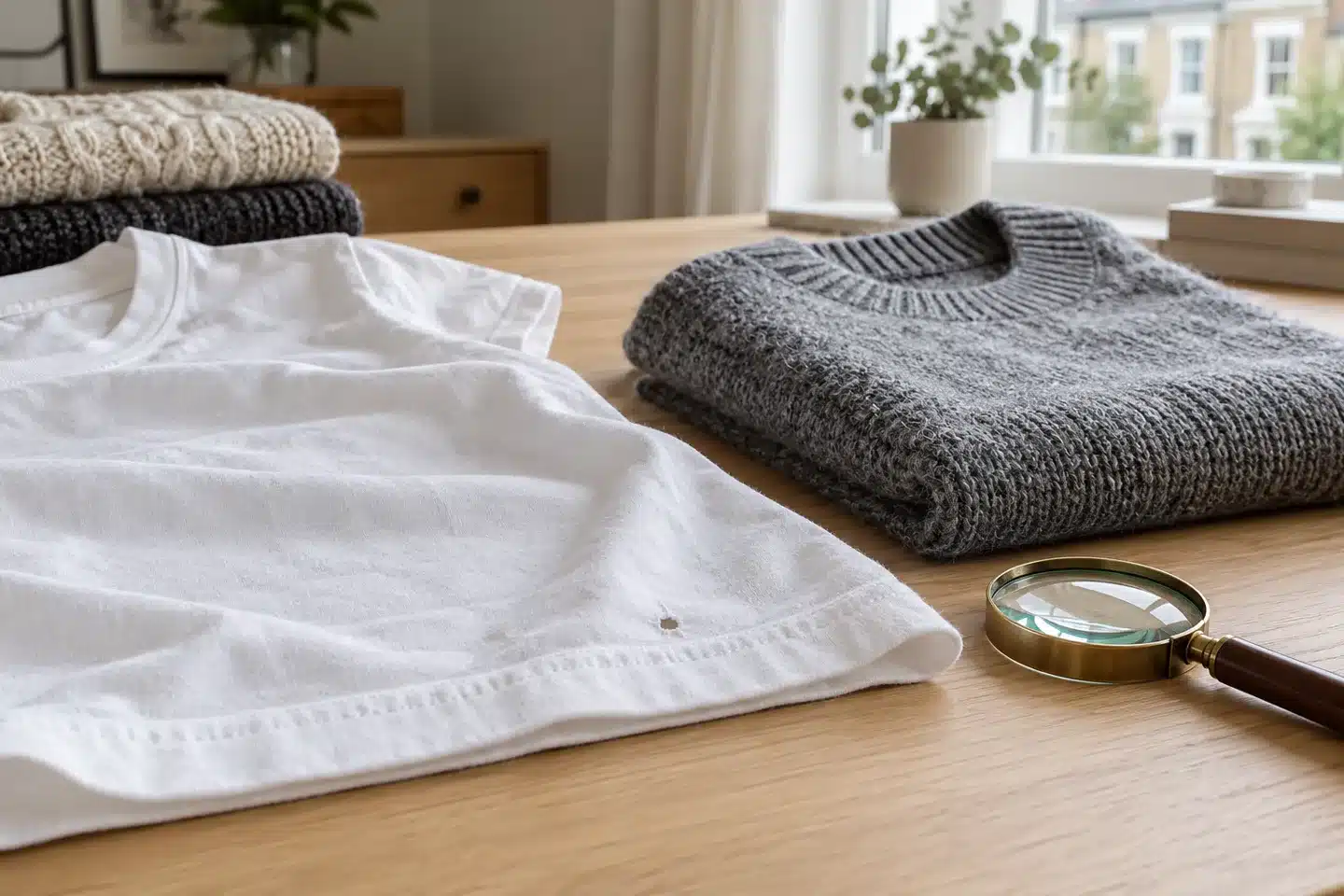
Why cotton and wool have different risks
Cotton is a plant fibre, while wool is an animal fibre containing keratin. Calling both “natural fabrics” hides an important difference: natural does not automatically mean equally attractive to textile moth larvae. The University of Kentucky’s clothes-moth guidance describes cotton and synthetic fabrics as rarely attacked unless they contain wool or are heavily soiled.
A clean cotton shirt therefore presents a different feeding opportunity from a wool jumper. That does not make the shirt a reliable barrier around an infested item, or prove that insects cannot be present amongst cotton clothing.
The Canadian Conservation Institute’s textile guidance explains that clothes moth and carpet beetle larvae can damage cotton and synthetics where soiling is present or the material obstructs their route to food. Feeding preference and the ability to damage a material are not the same thing.
Which fabrics deserve attention?
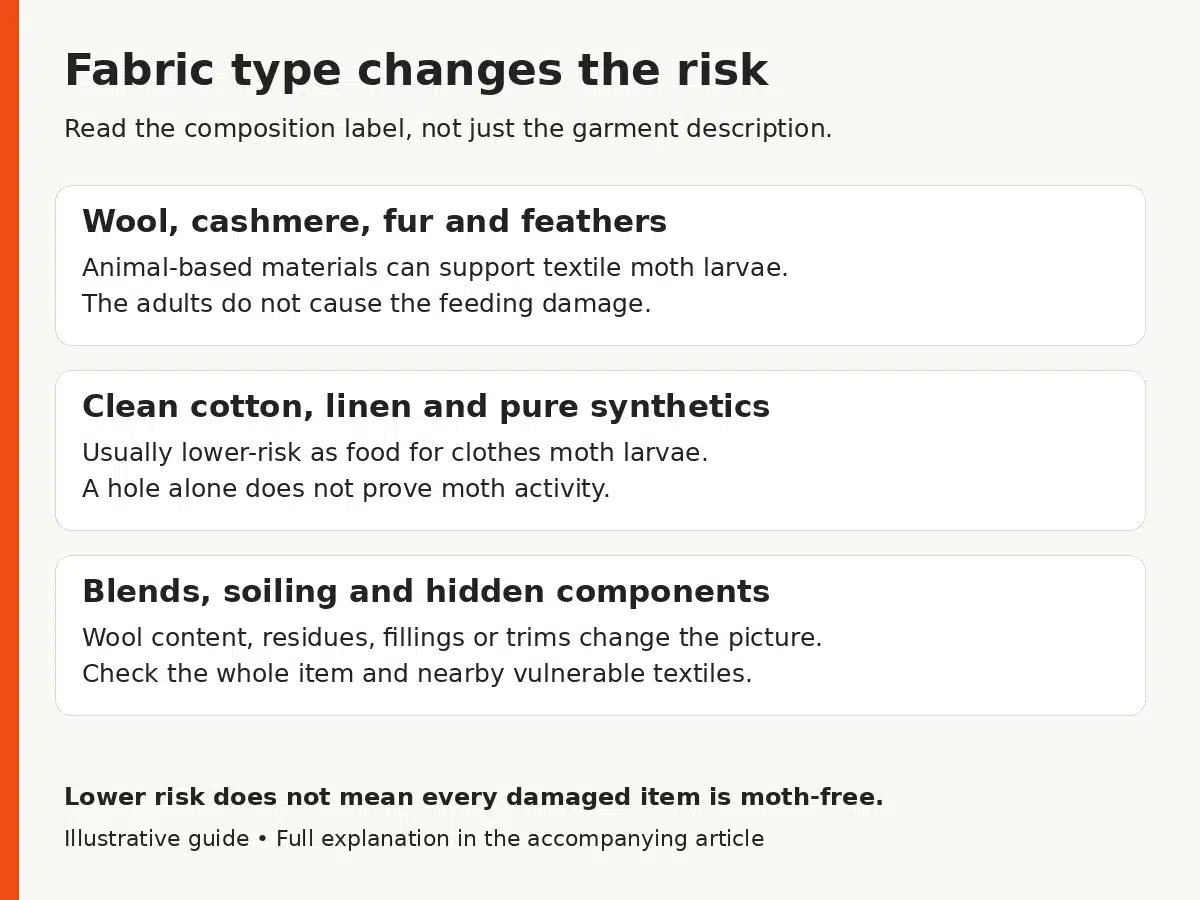
- Wool, cashmere and other animal hair: these are priority materials when textile moths are suspected. Include felt, fur and feather-filled items in your thinking.
- Cotton and linen: clean plant fibres are generally a lower feeding risk. Check contamination, blends and adjacent materials before drawing conclusions.
- Polyester, nylon and acrylic: pure synthetic fibres are not a preferred food, but a synthetic-looking garment may contain wool or have vulnerable components.
- Silk: treat valuable silk cautiously. It is an animal-derived protein fibre, but its principal protein is fibroin, not the keratin in wool. Soiling can increase its vulnerability.
- Mixed textiles: assess all components. A cotton cover does not describe the filling of a cushion, and a coat’s outer fabric does not describe every trim or lining.
This is a practical comparison, not a promise that any category is immune. The label, condition and construction of the actual item matter more than its appearance or where it was bought.
Read the full label before blaming cotton
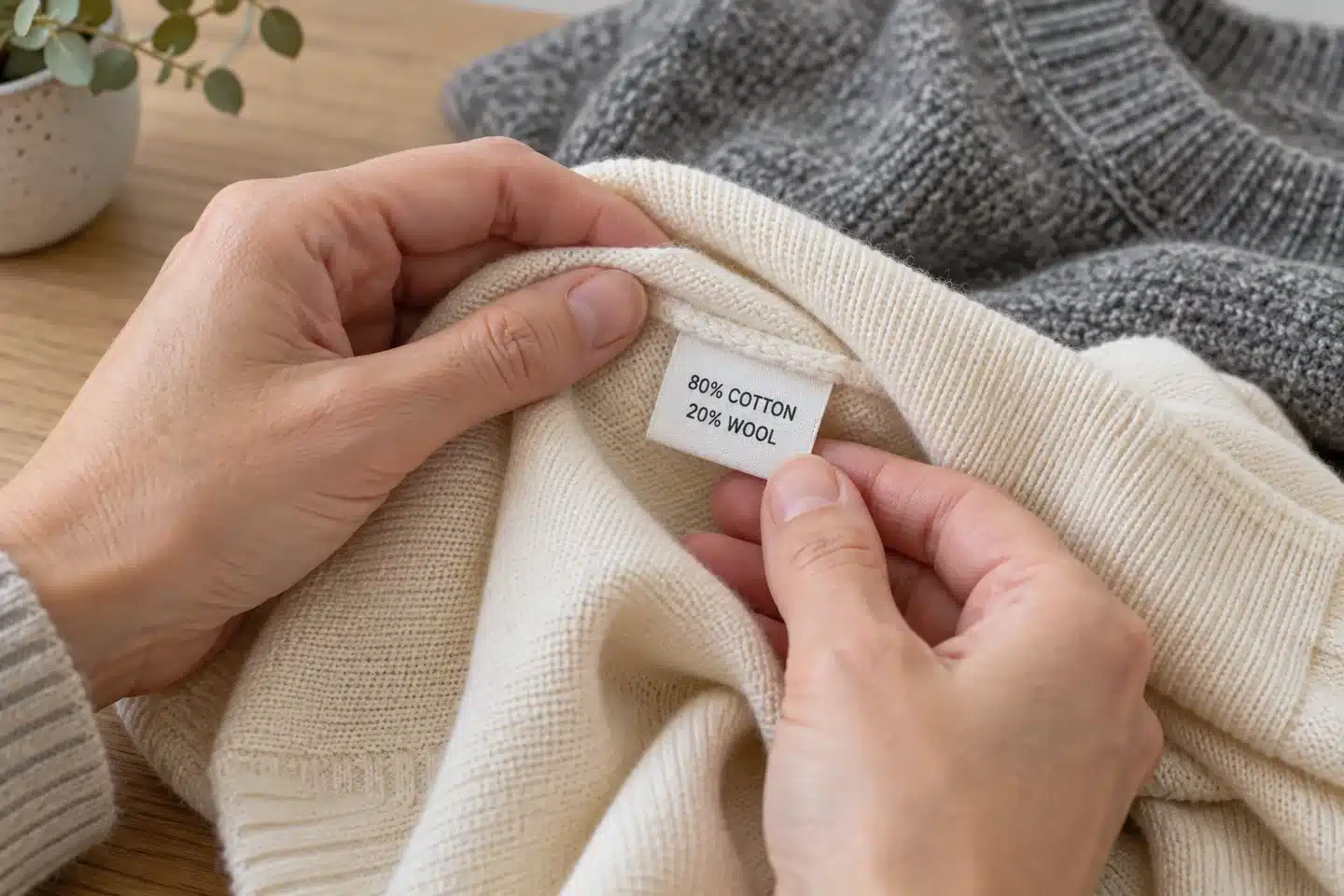
Start with the fibre percentages. “Cotton rich” does not mean “100% cotton”, and a cotton-wool blend still contains food suitable for textile moth larvae. University of California IPM guidance specifically includes cotton and synthetic blends containing wool among materials they can feed on.
Read separate labels for an outer shell, lining and filling where supplied. For an unlabelled vintage garment, rug or cushion, record that the composition is unknown rather than guessing from how soft it feels.
For example, an illustrative label reading “80% cotton, 20% wool” should lead you to treat the item as a wool-containing blend. It does not mean there is a 20% chance of moth damage: percentages describe fibre composition, not a measured infestation risk.
Then consider its condition. Mississippi State University Extension highlights sweat, dandruff and other stains as relevant to clothes-moth attraction. A worn garment returned to a drawer is not equivalent to a freshly cleaned one, even if no conspicuous stain is visible.
Could the holes have another cause?
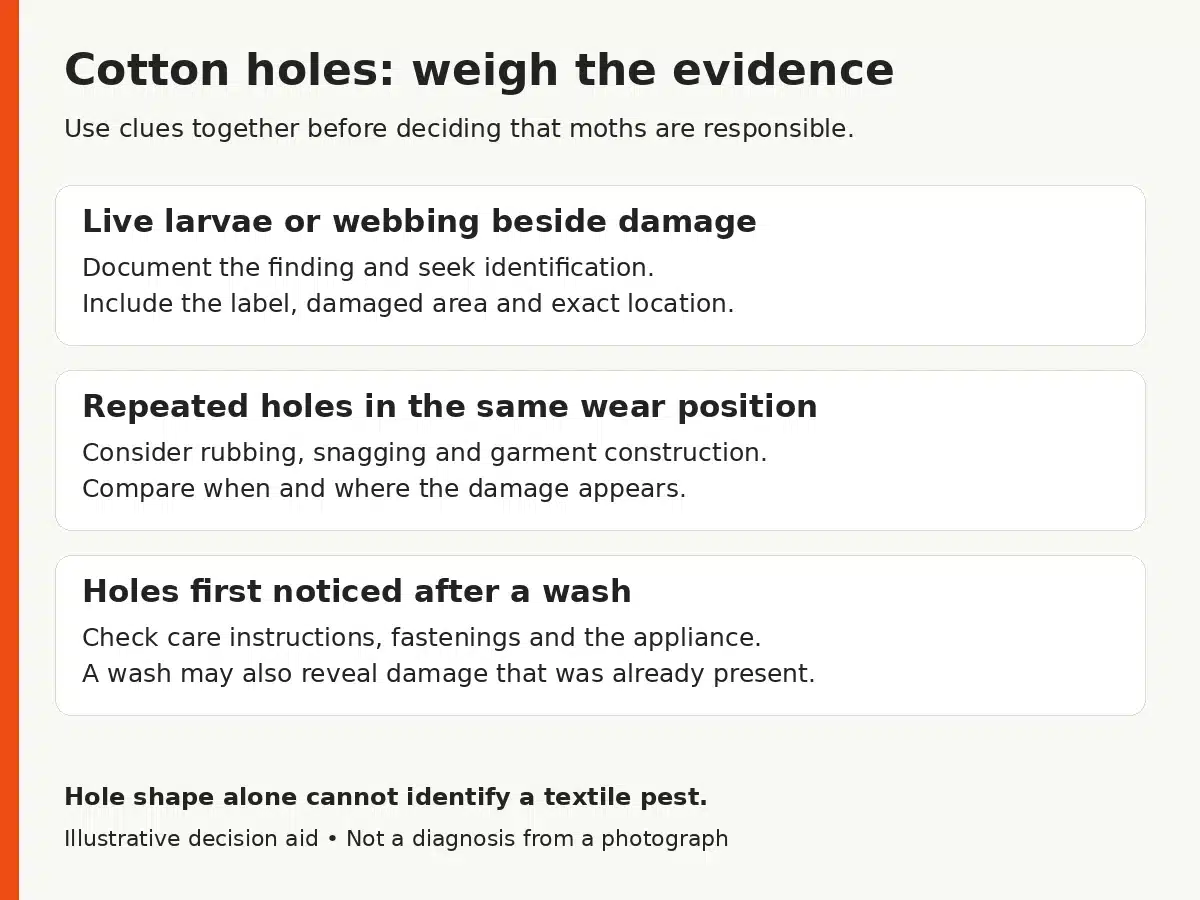
A photograph of a hole can document damage, but usually cannot identify what caused it. Avoid treating every pinprick as a moth bite or assuming that an irregular edge settles the question.
Rubbing, snagging and everyday wear
Consider whether damage repeatedly appears where the same part of a garment meets a fastening, a work surface or another rough edge. A repeated pattern is a reason to investigate mechanical wear; it is not proof that insects are absent.
Compare several affected garments. Are they all worn in a similar way, made from a similar thin knit or damaged in the same position? Or are different items developing damage while stored undisturbed? Those observations help you decide what to investigate next without assigning a cause prematurely.
Laundry and appliance damage
AEG’s guidance on holes after washing identifies open zips, hooks, objects left in pockets, overloaded drums and appliance faults as possible causes. Follow garment and appliance instructions, close appropriate fastenings and use a laundry bag where recommended.
Finding a hole after washing does not establish when the fibres were first weakened. Make a simple comparison before and after laundering rather than assuming either the washing machine or a pest must be responsible. If you suspect a damaged drum or door seal, arrange an appliance check instead of repeatedly testing it with valuable clothing.
Other textile pests
Carpet beetles can damage similar materials, but they are different insects. Their larvae are generally hairy or bristly; clothes-moth evidence can include silk webbing or cases. The UC IPM carpet-beetle guide cautions that damage alone does not always distinguish the two.
Use our carpet beetle identification and treatment page when bristly larvae or shed skins are present. Moths associated with cereal, flour or pet food call for a separate food-cupboard investigation; a pantry moth sighting is not evidence that it made holes in your shirt.
A useful evidence check for damaged cotton clothing
Keep this check focused on the affected item. For a wider search, follow our room-by-room moth inspection guide.
- Photograph the whole garment and the damage. Include its fibre label and a ruler beside the hole. Note where it was kept and when you first noticed the change.
- Record what is actually present. Separate a hole from a live larva, webbing, a case or loose lint. Keep an uncertain insect in a closed clear container for identification if practical.
- Compare nearby vulnerable items. An affected cotton top beside a damaged wool jumper deserves a different investigation from several work T-shirts with holes in the same wearing position.
- Write down the timing. Note recent wear, washing, storage and newly introduced textiles. Dates guide an investigation; they do not prove how an insect arrived.
- Choose the next step from the evidence. Suspected mechanical damage calls for garment or appliance checks. Live insects, webbing or continuing damage warrant textile-pest identification.
These are prompts for gathering useful information, not a diagnostic scoring system. You do not need to identify microscopic eggs or dismantle furniture before asking for help.
What to do if moth activity is confirmed
Keep suspect movable textiles separate and contained before carrying them elsewhere. Check care instructions and explain the suspected infestation to a professional cleaner before bringing garments in. Do not assume a routine cool wash will kill every life stage, or use a hotter process than the fabric can tolerate.
English Heritage’s moth guidance stresses both textile care and cleaning of the surrounding space. Cleaning one top will not resolve a separate source in a wool rug or stored furnishing. Our guide to storing clean clothes covers the prevention routine once affected items and their surroundings have been addressed.
For confirmed or recurring activity, professional moth treatment should be matched to the materials and extent of the problem. Controlled moth heat treatment is one option for suitable areas and contents; it is not a reason to improvise heating at home.
Moth monitoring can help track adult activity alongside physical findings. It does not establish from an empty trap that every concealed larva is gone. Avoid buying a treatment solely because cotton has holes: identification should come first.
Frequently asked questions
Do moths eat 100% cotton?
Clean, pure cotton is not a preferred food for clothes moth larvae. Cotton can still be damaged where it is soiled or obstructs access to a suitable food source. A cotton label and a hole are not enough to confirm or rule out moth activity.
Can a cotton-wool blend get moth damage?
Yes. A blend containing wool includes animal fibre that clothes moth larvae can feed on. Read the complete composition label rather than assuming a garment is protected because cotton is its largest component.
Do moths eat polyester?
Pure polyester is not a preferred food for clothes moth larvae. Wool blends, soiling and other components can complicate the risk, so check the entire item and the evidence around it.
Why are there tiny holes near the bottom of my T-shirts?
Repeated rubbing or snagging is one possibility, especially when damage appears in the same wearing position. Laundry damage and textile pests are other possibilities. The position or shape of a hole cannot identify the cause by itself.
Should I spray cotton clothes if I suspect moths?
Do not apply a general household insecticide to clothing. Isolate suspect items, check their care instructions and seek advice on an appropriate cleaning or treatment method. Tell a dry cleaner about suspected insect activity before bringing items in.
Need help interpreting the evidence?
Send clear photographs of the insect or webbing, the damaged area and the fibre label, with the room and storage location. Tell us whether other textiles are affected and what cleaning or treatment has already been tried.
Moth Treatment Pros, part of the ThermoPest group, specialises in textile pests. Check our London service coverage and current treatment pricing, or request an assessment to discuss the evidence in your home.